A Homeowner’s Real-World Guide to Surviving a Calgary Roof Replacement
It Starts Weeks Before Anyone Picks Up a Hammer
If you’ve never had your roof replaced, the whole thing probably sounds like chaos. Loud noises, strangers on your property, debris everywhere, your house looking like a construction site for days. And yeah, some of that is accurate. But most of the stress comes from not knowing what’s coming. Once you understand the timeline and what happens at each stage, it’s a lot more manageable than you’d think.
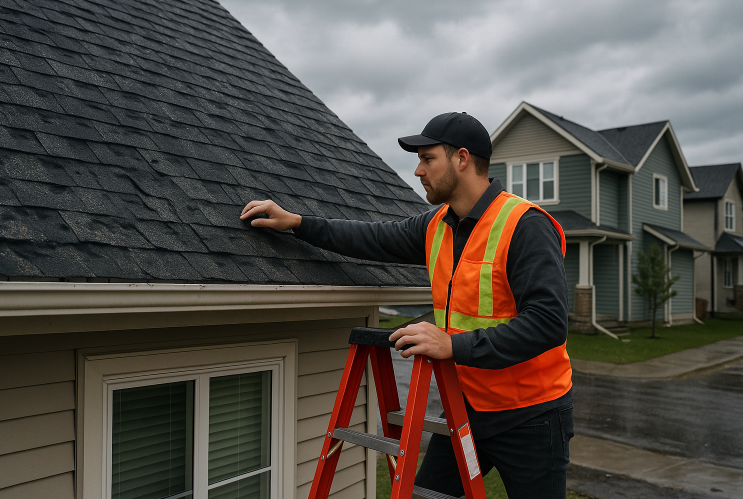
The process kicks off well before the crew shows up. Any contractor worth hiring will come out for a proper inspection first — and I mean proper. They should be climbing up on the roof, not just squinting at it from the driveway. They’ll check the shingle condition, look at the flashing, evaluate ventilation, examine the gutters, and ideally pop their head into your attic to see the decking and insulation from underneath. If someone hands you a quote without ever setting foot on a ladder, that’s a red flag the size of your roof.
After the inspection comes the conversation about materials. This is where you’ll talk about shingle types, colours, underlayment options, and what makes sense for your budget and your home’s specific needs. A good contractor explains the trade-offs honestly instead of just pushing the most expensive product. You’ll get a written estimate that breaks down materials, labour, disposal, and any contingencies — like the possibility of damaged decking that can’t be seen until the old shingles come off.
Scheduling Around Calgary Weather Is Its Own Adventure
Once you’ve signed and chosen your materials, the contractor schedules the work. In Calgary, this step comes with a big asterisk. Weather here doesn’t care about your calendar. A perfectly clear week can get interrupted by a late-spring snowstorm or a sudden hail cell, and responsible contractors will bump the schedule rather than install shingles in bad conditions.
Good communication matters here. Your contractor should let you know about delays before you wake up expecting a crew that isn’t coming. If you’re the one always chasing them for updates, that tells you something about how the rest of the project will go.
Day One Looks Like Organized Mayhem
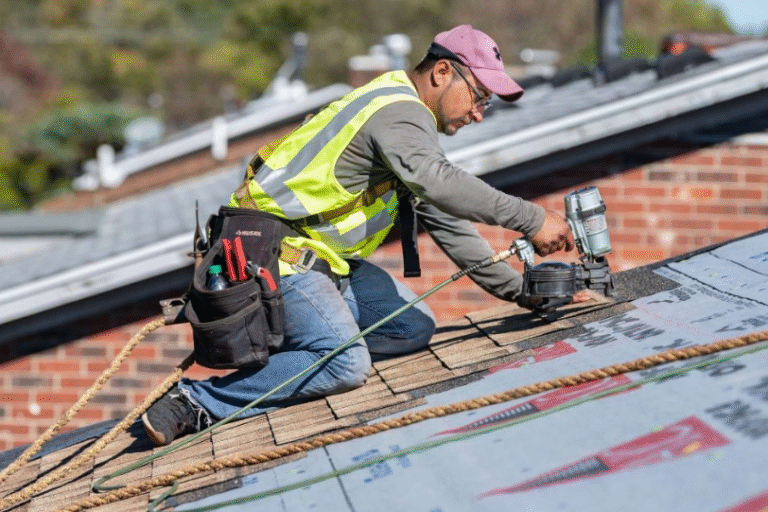
The first morning will feel intense. A crew of five to eight people shows up early, usually by 7 or 7:30. They’ll lay tarps around the base of your house to catch debris and protect your flower beds, siding, and windows. A dumpster gets dropped in your driveway. Ladders go up. Safety harnesses go on. If you’ve got vehicles parked within about 20 feet of the house, move them the night before. Shingle grit has a supernatural ability to find its way onto car hoods.
Then the tear-off starts, and this is the loud part. The crew uses specialized flat shovels — imagine garden shovels that spent time in the gym — to strip every old shingle down to the bare deck. If there’s only one layer of shingles, this moves fast. Two or three layers (which isn’t uncommon on older Calgary homes) takes longer and fills that dumpster in a hurry. On a standard-sized house, the tear-off is usually done by early afternoon.
For anyone working from home that day: find a coffee shop. Or a library. Or a friend’s living room. The tear-off sounds like a team of very motivated drummers rehearsing directly above your desk. Your dog will not enjoy it either — if you can board pets or have them stay with someone for the first day, everyone will be happier.
The Deck Inspection Is Quietly the Most Important Part
Once the old material is gone, the crew gets their first real look at the roof deck — the plywood or OSB sheeting that everything attaches to. This step matters more than almost anything else in the whole project, because damaged decking is completely invisible when shingles are in place. This is the one and only chance to find soft spots, rot, water damage, and delamination before a brand new roof goes on top.
If sections need replacing, the contractor cuts out the bad material and installs new sheeting. This should have been discussed as a possibility during your initial estimate. Any experienced Calgary roofer knows that deck damage is common here, given how hard our winters are on everything. The cost varies depending on how much needs replacing, but a good contractor gives you a per-sheet price upfront so you’re not ambushed.
See also: From Research to Reality: Commercializing Tech
Underlayment and Ice Shield Go Down First
Before the new shingles, two critical layers get installed. The underlayment — a synthetic membrane that replaced the old tar paper most homes used to have — goes across the entire deck. Modern synthetics are tougher, drain better, and allow more moisture vapour to escape from the attic. It’s a meaningful upgrade if your old roof had the traditional felt paper.
Ice and water shield goes on in the high-risk zones: along the eaves where ice dams form, in the valleys where water concentrates, and around every penetration — chimney, vents, pipes, skylights. In Calgary, this layer isn’t optional. Our freeze-thaw cycles push water sideways and uphill in ways that would seem to defy gravity, and ice and water shield is the last line of defence against that.
Shingles Go On From Bottom to Top
The shingling itself is methodical and takes the longest of any step. Crews start at the bottom edge and work upward, overlapping each course so water always runs down and off without getting underneath. Starter strips go along the eaves first, then full shingles in staggered rows. Flashing gets installed or replaced around every joint — chimney, vents, skylights, wall intersections. Ridge vents go along the peak to allow hot air to exhaust from the attic.
For a typical Calgary home, shingling takes one to two full days. Bigger homes, complex roof shapes with lots of dormers or valleys, and steeper pitches all add time. The crew works rain or shine as long as conditions are safe, but they won’t install shingles in a downpour or high wind.
Cleanup Is Where You See a Crew’s True Character
At the end of each day — and especially at the end of the project — the crew cleans up. This means every nail, every shingle fragment, every scrap of packaging gets picked up. Professional crews run a magnetic roller across your lawn, driveway, sidewalks, and even the street to catch stray nails. This isn’t a nice-to-have. A single roofing nail in your tire or your kid’s foot can ruin a week.
If you come home and the yard looks like a tornado hit a hardware store, that’s a statement about the crew’s standards across the board. The cleanup tells you as much about a contractor as the roof itself does.
The Whole Thing Takes Two to Four Days
Start to finish — tear-off, deck inspection and repair, underlayment, shingling, flashing, ridge vents, cleanup — you’re looking at two to four days for most homes in Calgary. Complex projects might stretch to five. Weather can add a day. Build in a buffer if you’re planning around a specific date.
Permits, Inspections, and the Paperwork You Shouldn’t Ignore
Full roof replacements in Calgary typically need a building permit, and the city usually sends an inspector after the work is complete. A solid contractor handles all of this — pulling the permit, scheduling the inspection, making sure everything passes. If your contractor tells you a permit isn’t needed, or if they suggest skipping that step to save time, that’s a problem you’ll want to sort out before work begins.
A Few Things That Make the Whole Experience Easier
Tell your neighbours what’s happening. The noise carries and a heads-up goes a long way. Clear your driveway completely — the dumpster needs space, and the crew needs room to stage materials. Move patio furniture, barbecues, potted plants, and anything fragile away from the house perimeter. Things fall off roofs during tear-off, and gravity isn’t picky.
A roof replacement is disruptive. There’s no way around that. But it’s a short stretch of noise and inconvenience in exchange for decades of protection. And once it’s done, you get to stop thinking about your roof for a very long time. That alone is worth the trouble.